What Place for Renewables in the INDCs?

What_place_for_Renewables_in_the_INDCs

Abstract

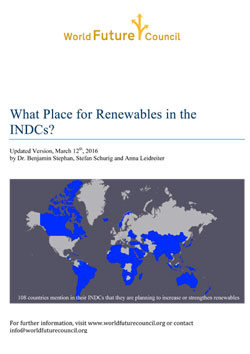
COP 21 In Paris most likely marks a turning point in international climate policy making: UNFCCC parties for the first time adopted a legally binding agreement that is universal and provides a mechanism that has the potential to build global mitigation efforts that help us to avert dangerous climate change. Intended Nationally Determined Contributions (INDCs) are a crucial element of the Paris Agreement. They are the foundation on which the success of global mitigation efforts will be built. Scientific assessments concluded that current INDCs are an important contribution, but still fall short of reaching the long-term goal adopted with the Paris Agreement of “Holding the increase in the global average temperature to well below 2 °C above pre-industrial levels and to pursue efforts to limit the temperature increase to 1.5 °C above pre-industrial levels…” by the end of the century (UNFCCC 2015a: Article 2). The available assessments vary in their results – depending on the underlying models the assessments deployed (Levin and Fransen 2015).

Cities, don’t just minimise energy use. Challenge it!

Between 1900 and 2000, global population increased 4 times, but resource demand increased 16 times.

Even worse, last year, the collective resource consumption by humanity overshot the earth’s ability to regenerate in August already. This means that we used all the resources the planet produces in 12 months in the first 8 months, and for the rest of the year we were literally in debt to nature. And cities, with a modus operandi fuelling and fuelled by fossil resources like coal, oil and gas, are largely responsible for it, accounting today for 70% of GHG emissions.

But often too, cities feel more severely the risks of the climate change they themselves create. Even in a place like New York City, one of the most advanced and wealthiest cities in the world, in 2012, Hurricane Sandy shut down the city, caused power outages and blocked roads and transport for days. It is clear that we need to revert this path marked by unsustainable development, which is growing disaster risks and whose main crystallisation is taking place in cities.

So how do we get back on track? And what’s the role of cities?

We can’t just do less damage; we have to repair the damage and ensure that cities operate in a system in which they do not only consume resources, but they also contribute to producing and restoring the resources they consume. In this system, materials and goods from the region are prioritised by cities. Waste is re-defined as a by-product that can always be recycled or reused in another processes. Water is also recycled or treated before discharged into natural water bodies. Organic waste is treated and used as soil fertilizer. And energy comes from local renewable energy sources. In a nutshell, we leave behind the city organised around petrol to give way to the Regenerative City.

Fortunately, there are encouraging signs on that front, as I could witness at the Smart City Expo Puebla, celebrated in Mexico from February 16-18, in which the World Future Council participated. Interventions made by mayors and experts working at the local level revealed that cities are aware of the profound and urgent shift they need to make in the way they produce and use energy. And, as managers of energy infrastructures and services, they are uniquely positioned to do it.

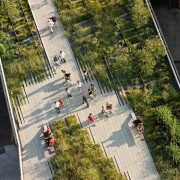
This strategic approach has led cities to innovate with new kinds of recycling programs. For example, the city of Buenos Aires has seen a 50% reduction in waste sent to landfills compared with 2012 and it has committed to reducing it further by 83% by 2017. And something that would be unthinkable decades ago, cities are starting to give priority to green areas over highways, as clearly exemplified by the restoration of the Cheonggyecheon stream in Seoul, which for more than three decades buried beneath a four-lane, elevated freeway built as part of an industrialisation and modernisation process. The building sector, too, is subject to new policies in this direction, as it was highlighted during the conference. For example, NYCis undertaking a 10-year plan to improve the energy efficiency of NYC’s one million buildings to reduce building-based emissions 30% by 2025. Mexico City is developing norms for building energy performance to double the energy efficiency rate of buildings by 2030. And Portland is working with residents, businesses and community partners to advance ecoroofs in the city as a means to save energy consumption, reduce pollution and decrease stormwater volume.

Most important, cities are starting to realise something fundamental: they need to go beyond minimising energy use to actually challenge it. Energy efficiency is not only about simply reducing energy demand to offer the same service, but about a fundamental change in the structure, nature and role of the energy system. And nothing epitomises best this than Vancouver orFrankfurt, which are taking strong action on energy efficiency as a core component of their strategy to go 100% RE by 2050.

Thus, Vancouver intends to reduce city-wide building energy demand by about one-third over 2014 levels by 2050, and meet the rest of the energy demand through renewable electricity. Similar in the transport sector, where the goal is to shape the transport system in a way that most of the journeys will be made on foot or by bike, and the remaining trips by transit will be made using electric vehicles of various types. All together, these two sectors accounted for over 90% of the city’s emissions in 2014. In the case of Frankfurt, energy efficiency measures have led to a 37 per cent reduction in electricity consumption by private households by 2015. As with Vancouver, the rest of the energy consumption and production demand will be met through local and regional renewable sources.

This does not only make sense in terms of climate and environmental protection, but also in terms of economic development. By focusing on regenerative urban development, the city of Vancouver has created more than 3.000 new green local jobs in the last 5 years. And the city’s brand is currently valued at US$31bn when measured by investment, reputation and performance as “green, clean and sustainable”. In Frankfurt, energy efficiency measures have already helped the city to save €100m in energy costs, a number that is projected to rise. And its 100% RE strategy is gradually bringing down its current energy import costs from €2bn a year to zero.

Locally determined contributions of cities like these ones show us that challenging the traditional energy system upon which cities have been built is actually possible, and indeed beneficial from a social, environmental and economic point of view. Just imagine what world would be possible if we start replicating these successful champions and make the transition to regenerative cities on our own terms, in ways that maximise the benefits to us today and to future generations. Surely a very different kind of city story to tell.

By Irene García, Project and Event Manager – Climate, Energy and Cities.

Regenerative Cities in China

Renegerative-Cities-in-China-thumbnail

Abstract

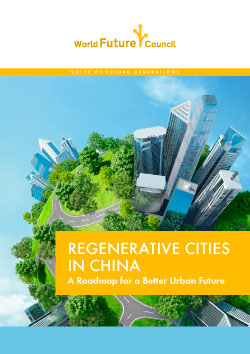
A new type of urbanization is needed. One that reflects a different type of development, also known as the New Normal which is currently gaining widespread support throughout China. The New Normal understands the substantial changes affecting China (namely a decline in the availability of inexpensive land and cheap labour, slower economic growth and, above all, increasingly exacerbating environmental distresses) and responds by promoting a new kind of people-centred development that favours slower economic growth, people well-being, innovation, domestic market development and that is particularly devoted to environmental protection and sustainability.

In order to ensure the successful implementation of the New Normal, a new model of urbanization that encourages and supports this new type of socio-economic development is needed. It is hereby recommended that cities in China start their transformation to become Regenerative Cities. Given the environmentally degraded conditions of many Chinese cities and ecosystems, a regenerative type of urban development that is able to establish a symbiotic and mutually beneficial relationship with the environment is not only recommended but urgently needed.

English
 
中文

Sponge Cities: What is it all about?

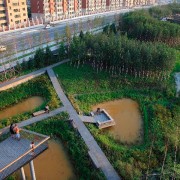
The 34 hectares urban storm water park in the city of Harbin in northern China is an example of successful Sponge City intervention. The storm water park provides multiple ecosystems services: it collects, cleanses and stores storm water and lets it infiltrate it into the aquifers. At the same time it protects and recovers the native natural habitats and provides an aesthetically appealing public space for recreational use.


Sponge City. Yet another term on the growing list next to regenerative, sustainable, green, eco, resilient, low-impact, future proofing, zero-carbon, and the list goes on.

Strange as it may sound, this term has actually gained a huge amount of support, especially in China. In fact, the Chinese government has already chosen 16 pilot cities and allocated to each of them between 400 and 600 million yuan for the implementation of innovative water management strategies that would gradually transform these cities into “Sponge Cities”.

What are the key issues the Sponge City wants to solve?

Before explaining in more detail what a Sponge City actually is, it is important to appreciate the main issues that the Sponge City intends to tackle. These are mainly four:

  • Less water available in urban and peri-urban areas. First of all, a key question we need to answer to explain this issue is: Where do we get the water that comes out of our taps? Many times it is actually coming from aquifers underneath our feet. As it rain, water is absorbed by the ground and naturally filtered by the soil. We can then extract this water by drilling wells into the ground and pumping water out of it. The water is then collected and treated before is distributed across the city and can reach every tap in each of our houses and offices. The problem is that extensive urbanization and urban sprawling led to the formation of thousands of square kilometres of impermeable areas made up of impervious roads, pavements, roofs and parking lots that do not allow water to be absorbed into the ground but that simply collect the rainwater through the urban drainage infrastructure and channel it into rivers, lakes or into the sea. This traditional type of design led to the creation of cities which are increasingly impermeable and have an increasingly greater impact on the natural water cycle. In practise this means that since less rain water is allowed to filter through the urban soil, less water is available to be extracted from aquifers in urban and peri-urban areas.
  • Polluted water discharged into rivers or the sea. Another key issues is related to the fact that rain water and wastewater (namely water from our sinks and toilets) is collected by one single drainage system. This drainage system (imagine one big pipe) collects all the rain water (when it rains) and the wastewater from our houses and directs it to a wastewater treatment plant where it gets treated before it is discharged again into rivers or the sea. When it rains, many times the wastewater treatment plant cannot accommodate all the water that the drainage systems carries. Therefore much of the rain water mixed with the wastewater is discharged untreated into rivers. The more impermeable the city is, the more water will be mixed with wastewater and will not be able to be treated but discharged directly into rivers.  This increases the level of pollution of local water bodies.
  • Degradation of urban ecosystems and green areas due to sprawling. This led to a considerable loss of urban biodiversity, a drop in available green areas for natural ground filtration of storm water, a decrease in CO2 capture by plants, fewer spaces for natural cooling through urban green microclimates and generally less liveable, healthy, comfortable and attractive public spaces.
  • Increase in the intensity and frequency of urban flooding particularly considering predicted increase in extreme weather events due to climate change. As the absorbing capacity of the urban surface is decreased, storm flooding risk is increased. Flooding leads to increased groundwater pollution and has considerable impact in terms of damage to properties and health related issues.

What is a Sponge City?

The Sponge City indicates a particular type of city that does not act like an impermeable system not allowing any water to filter through the ground, but, more like a sponge, actually absorbs the rain water, which is then naturally filtered by the soil and allowed to reach into the urban aquifers. This allows for the extraction of water from the ground through urban or peri-urban wells. This water can be easily treated and used for the city water supply.

What does a Sponge City need in practise? 

A sponge cities needs to be abundant with spaces that allow water to seep through them. Instead of only impermeable concrete and asphalt, the city needs more:

  • Contiguous open green spaces, interconnected waterways, channels and ponds across neighbourhoods that can naturally detain and filter water as well as foster urban ecosystems, boost bio-diversity and create cultural and recreational opportunities.
  • Green roofs that can retain rainwater and naturally filters it before it is recycled or released into the ground.
  • Porous design interventions across the city, including construction of bio-swales and bio-retention systems to detain run-off and allow for groundwater infiltration; porous roads and pavements that can safely accommodate car and pedestrian traffic while allowing water to be absorbed, permeate and recharge groundwater; drainage systems that allow trickling of water into the ground or that direct storm water run-off into green spaces for natural absorption
  • Water savings and recycling, including extending water recycling particularly of grey water at the building block level, incentivizing consumers to save water through increased tariffs for increase in consumption, raising awareness campaigns, and improved smart monitoring systems to identify leakages and inefficient use of water.

What are the benefits of a Sponge City? 

There is wide range of benefits associated with the implementation of sponge cities. These include:

  • More clean water for the city. Replenished groundwater and thus greater accessibility to water resources for cities. This also entails greater water self-sufficiency which allows cities to increasingly rely on water sources from within their boundaries
  • Cleaner groundwater due to the increase volume of naturally filtered storm water. This means lower environmental and health costs due to considerable decrease in water pollution
  • Reduction in flood risk as the city offers more permeable spaces for the natural retention and percolation of water. This leads to better resilience and in particular greater ability to deal with higher flood risks resulting from climate change
  • Lower burdens on drainage systems, water treatment plant, artificial channels and natural streams. This also entails lower costs for drainage and treatment infrastructure
  • Greener, healthier, more enjoyable urban spaces. Greener urban spaces improve quality of life, create more pleasant landscape aesthetics and recreational areas that are enjoyable and attract people. This also means increase in land value due to aesthetically more pleasing, cleaner and healthier open spaces close to private properties
  • Enriched biodiversity around green open spaces, wetlands, urban gardens and green rooftops

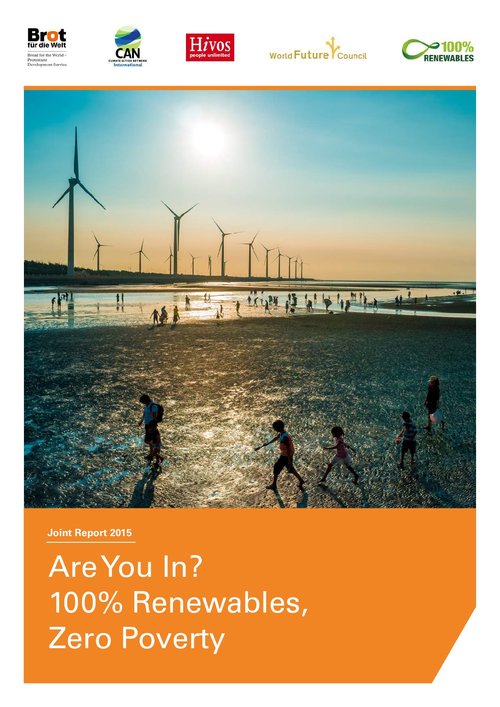
Are you in? 100% Renewables, Zero Poverty

Abstract

In September 2015 world leaders signed off on a new global 15 year plan to tackle poverty inequality and climate change. In doing so, they pledged to ensure all people have access to affordable, reliable, sustainable and modern energy. Today 1.2 billion people (nearly 1 in 7) lack access to electricity. But communities are rolling out renewables in order to beat back poverty, as these technologies can provide sustainable energy access where coal, oil and gas have failed for the last century. Sustainable energy can improve health by reducing pollution, it can improve education, create jobs and kickstart industries in minor economies.

There is already a growing movement of leaders from villages, cities and businesses around the world who are not waiting for national governments to act, but are getting their own communities on track to a 100% renewable energy powered future – to deliver the just, equitable, healthy and prosperous world we need. This report features a range of these people whose stories highlight the development benefits derived from getting on track to go 100% renewable.

Full Report

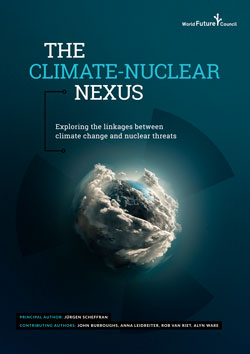
The Climate-Nuclear Nexus

The_Climate-Nuclear_Nexus_thumbnail

Abstract

While humanity faces a range of interconnected transnational threats and crises in the 21st Century—including extreme poverty, hunger, pandemic disease and demographic change—climate change and the continued existence of nuclear weapons stand out as the two principal threats to the survival of humanity. On the long arc of human existence, both threats are relatively new to the scene, having only appeared over the last century. Both threaten the survival of life on earth as we know it and both are of our making.

The original report was released in November 2015, in time for the Paris Climate Change Conference. It was updated in April 2016 to reflect the outcomes of that conference as well as include updates on climate change litigation.

Full Report

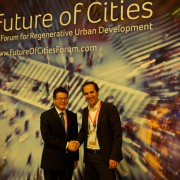
Future of Cities Forum 2015


Thank you to all speakers and participants that contributed to make the Future of Cities Forum 2015 a great success!

We are extremely confident that new thrilling opportunities will be coming up as a result of this year Future of Cities Forum and we look forward to engage further with everyone who took part in the Forum.

About this year Forum

This year, the 5th Future of Cities Forum was held on September 14th and 15th 2015 in Beijing and in Tianjin. On the first day, 14th of September, the Future of Cities Forum was held in Beijing as an official sub-forum of the11th Forum on Environment and Development. On the second day, 15th of September, the Forum moved to Tianjin and will be held as an official subforum of the 6th China International Eco-city Forum & Expo.

The Future of Cities Forum in Beijing was organized in partnership with UNEP China,the United Nations Theme Group on Climate Change and Environment (UNTGCCE), ACEF (All China Environment Federation), China Urban Research Center of Beijing Jiaotong University, CITYNET and the Policy Research Center for Environment and Economy (PRCEE) of the China Ministry of Environmental Protection (MEP).

Day 1

The first day of the Forum focused on the UN Sustainable Development goals for cities and how these and other international initiatives can help and guide cities drive sustainable development forward. An open roundtable discussion between Chinese and international participants offered a unique opportunity to openly debate issues that are common across borders, in particular the lack of cooperation across city departments and lack of coordination across governance levels and across multiple stakeholders groups.

This first day of the Forum was held as an official sub-forum of the 11th Forum on Environment and Development organized in partnership with the United Nations Theme Group on Climate Change and Environment (UNTGCCE), with the All-China Environment Federation (ACEF) and with the China Urban Research Center of Beijing Jiaotong University. During the first day we had the chance to sign an official partnership with the China Urban Research Center of the Beijing Jiaotong University. This is an exciting opportunity for the WFC China to partner with a highly respected academic institution and moving forward with the critical task to bridge the gap between research and policy making. The MoU signing was witnessed, among others, by Mr. Yuqing Wang, former Vice Minister for Environmental Protection of China and Mr. Jong Soo Yonn, Head of the United Nations Office for Sustainable Development. Ole Scheeren, architect extremely known particularly in China for being the designer of the iconic CCTV tower in Beijing, was among our keynote speakers.

Day 2

During the second day, the forum moved to Tianjin where we offered a platform to share experiences on sustainable development of cities from China and from around the world. This second day was held as an official sub-forum of the 6th China International Tianjin Eco-city Forum & Expo, and supported by the Policy Research Center for Environment and Economy (PRCEE) of the Ministry of Environmental Protection (MEP). The Tianjin Eco-City Forum is one of the largest (almost one thousand participants from all over China) and most prestigious government supported forum in China. We are extremely proud to hear that following the event our partners from Tianjin were extremely happy about working with us and confirmed their commitment to continue this partnership in the future. Among our highlight speakers during the second day were Mr. Zefeng Shan, Deputy Director of the Tianjin Binhai district and Mr. Hing Huang, well-known social entrepreneur and winner of the Right Livelihood Award. The very international set of speakers that we brought from Germany to Canada and from India to Thailand were extremely appreciated particularly given the widespread longing to learn more from international experiences and to improve cooperation for sustainable development among cities around the world.

Pictures

You can find some pictures of the event at the link below:
Pictures of the Forum 2015

Presentations

The presentations slides are available on the download page.

Report

A brief outcome report will be available to be downloaded in the coming weeks.

About last year Forum

During last year´s Future of Cities Forum in Munich, 90 participants including mayors, town councillors, local administrators, researchers, practitioners, communicators and urban planners from 18 countries came together to debate what leadership and participation really look like in cities, share their experiences of building bridges with other urban stakeholders, and explore the factors that create long-term visions for cities. More info on past events please click here.

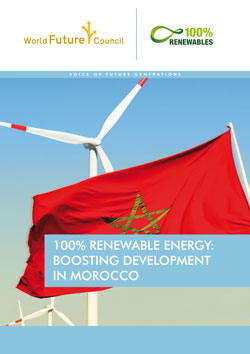
100% Renewable Energy: boosting Development in Morocco

Report_Morocco_A4_LoRes_EN-Thumbnail

Abstract

In order to ensure the development of a more sustainable, environmentally responsible and overall more liveable planet, we need to radically transform our energy sector and pave our way towards a cleaner and more just future powered by 100% Renewable Energy. To achieve this transformation, policy makers play an important role. Providing policy makers and the various stakeholders with the opportunity to discuss the tools and best practises to achieve this transformation effectively is therefore crucial. With this in mind, the World Future Council sees its role in connecting the dots between legislators and experts willing to take action and to take leadership on this journey.

This report provides an analysis on the current situation of the energy sector of Morocco and derives policy recommendations for a just transition towards a 100% Renewable Energy.

English
 
Français


Study Trip to El Hierro

Blown way by the success oh 100% Renewable Energy in El Hierro, Canary Islands, Spain

The World Future Council in cooperation with the Instituto Tecnológico de Canarias (ITC) hosted a study tour to El Hierro, Canary Islands, Spain for European Parliamentarians in order to provide hands-on capacity building on 100% Renewable Energy (RE). It provided an opportunity for Parliamentarians to meet practitioners and experts from the field to learn about potential policy outcomes and effects. The study tour did not only provide education and practical experiences but also an interactive and informal platform for knowledge exchange and discussions among policy makers.

Facts about El Hierro’s 100% RE strategy

How is the island supplied by 100% RE?

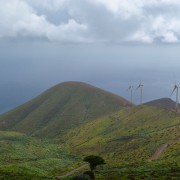
El Hierro’s 100% renewable energy strategy is anchored to its climate and geology. It benefits from stable and relatively strong winds throughout the year, and has appropriate island topography for the development of a pumped hydro storage system. As such, the majority of its 100% target is now being met by an 11.5MW wind farm, whose output is coupled with the functioning of a pumped hydro facility situated in a volcanic crater. When the winds are strong and the output from the farm exceeds the island’s demand (whose peak is approximately 7.5MW), the excess electricity is used to pump water into the upper reservoir constructed in empty crater for storage. When the winds are weak, or absent, the water stored in the upper reservoir is released and runs through hydro turbines (four units with a combined capacity of 11.3 MW) to produce electricity and storage in the lower reservoir. In this way, the pumped hydro system acts as a battery bank for the whole island. Another component of the system are the desalination plants that produce water for the islands’ residents – the plants are operated in an integrated manner with the wind farm, ensuring that the water supply for the island is also generated in a clean and sustainable way. Another component of the long term strategy is to replace the island’s 4,500 cars with electric vehicles, in order to further reduce reliance on imported fuels and promote sustainable development on the island. Finally, a focus has also emerged on encouraging the island’s agricultural industry to make greater use of bio-digesters in order to make use of local resources more efficiently.

What policy and governance framework enabled the success?

The Canary Islands’ policy framework integrated four political goals in a coherent and integrated vision, including 1) strengthening and diversifying the local economy, 2) energy security, 3) water security and finally 4) climate and environmental protection. El Hierro`s 100% RE strategy was enabled by the strong political will and commitment by the island`s government. Whereas the Regional Energy Plan for the Canary Islands foresaw a RE target of 36 % by 2020 for the region, El Hierro`s government officials achieved the implementation of 100% RE for their island. On the
regulatory side, Orden IET 1711, which sets the specific regulatory regime for the Wind-Pumped Hydro Power System of El Hierro, was key to realize the vision.

By proving its success, El Hierro inspired policy change for the Canary Islands as well. The regional parliament strongly supports the 100% RE target and has started to develop a robust policy framework to replicate the success on other islands. For example it just recently adopted the “decreto eólico 6” that simplifies the procedure for the authorisation of wind farms in the Canary Islands. Until now, wind farms were authorised through a tender process, which has delayed the installation of many of them. Now, the projects are authorised by the Regional Government, if all permissions are provided by the promoter (i.e. the promoter is not obliged to “wait” for the resolution of a tender process).

The initiative on El Hierro is a product of the close cooperation between the island government of the Canaries (which owns a 60% stake in the project), the Instituto Tecnológico de Canarias (which owns 10%), and a private Spanish energy and utility group (which owns the remaining 30%). Finally, there are several interconnected factors that have helped turn El Hierro into a leading example of a 100% renewable energy island. These include:

  • a long tradition of environmental leadership,
  • a sustained political vision among the local and regional governmental leaders
  • a high level of environmental awareness among the population, including the potential
    consequences of climate change
  • a desire for greater self-sufficiency

What does 100% RE in El Hierro cost and how does it impact the economy?

The current electricity generation cost on El Hierro provides significant opportunity for lower cost alternatives and to displace the diesel generation on the island. The island’s oil use is currently approximately 40,000 barrels per year totalling approximately USD $4 Million in annual fuel import costs. Estimates suggest that the project will save the island approximately $2.5 Million in diesel costs every year. The remainder is currently used in the island’s transportation system. However, once the vehicle fleet is transitioned to rely on domestically produced electricity, this will effectively eliminate the island’s reliance on diesel power. This will not only save the island millions of dollars per year in imported fuels: it will also reduce its exposure to fossil fuel price volatility, making it more resilient to external shocks and strengthening the local economy by keeping more of its income in the region.

The Canary Islands are relatively isolated, approximately 300 kilometers from the coast of West Africa. This remoteness makes it more costly to import power system components such as generators, turbine towers, and distribution system infrastructure; it also makes it more expensive to fly in technical experts, such as engineers and project developers. This was partly overcome by partnering with, and building on the existing capacities of a local institute based in the main island Gran Canaría (ITC) that provided significant technical and strategic support over the course of the project. Drawing on the capacity of the ITC made it possible to develop a cluster of expertise in the Canary Islands. Hereby, the island has become a hub for knowledge sharing and for providing advisory services to other island governments as well as to stakeholders in countries with off-grid regions. This has had direct positive impact on the local economy and created jobs as well as new business models. Finally, the support of both local, national and international institutes, of business partners, as well as funding bodies such as the European Union played an important, if not invaluable role.

Lessons learnt from El Hierro’s 100% RE approach

As an island, El Hierro provides valuable lessons for other constituencies implementing 100% RE. This is particularly true for other islands as well as for countries with off-grid regions. Here, technology transfer and advice can facilitate the replication of El Hierro`s success model – particularly the provision of clean water through renewable energy powered desalination plants – which can stimulate rural development and improve the quality of life of the poor. Similarly, jurisdictions with an interconnected system and national grids can draw on the experiences of the island with a small population of about 10.000 inhabitants. Whereas the technological approach is probably not directly transferable to industrialized, grid-connected countries, the policy framework provides valuable lessons and experiences. 10 elements of a 100% RE policy framework, which the EL Hierro example proofs right:

  • 100% RE is technically and economically feasible and is a matter of political will to achieve it.
  • A stable, reliable and robust regulatory framework is the determining factor for the long-term success. The perceived risk of RE resulting from political uncertainty is hence the biggest barrier.
  • Energy in many parts of the world is closely related to freshwater: 100% RE can be achieved by adopting an integrated policy approach for the energy and water sector (incl. desalination and wastewater treatment).
  • 100% RE is a tool for energy and water security: It reduces the jurisdiction`s exposure to fossil fuel price volatility and energy imports, making it more resilient to external shocks and strengthening the local economy by keeping more of its income in the region.
  • 100% Renewable Energy can generate new economic activity, create jobs and is a tool to create socio-economic value in a society as well as diversify the local economy.
  • A 100% renewable energy strategy must be anchored in the existing climate, socio-economic context and geology. There is no one-size-fits-all strategy and local feasibility studies should inform the implementation plan.
  • 100% RE can generate significant cost savings.
  • El Hierro suggests that a significant expansion of RE in the transport as well as in other sectors (water, heating/ cooling etc.) will need to become a strategic priority for governments to achieve 100% RE.
  • By developing more efficient energy infrastructure, it becomes easier to develop, finance, and integrate the remaining infrastructure required to meet a jurisdiction’s energy needs with locally
    available renewable resources.
  • By providing market access to a wide range of stakeholders (incl. public and private ones), policy makers can help build positive synergies across the region and leverage investments.

Policy recommendations deriving from El Hierro’s 100% RE approach

For National Legislators

  • Set a political 100% RE target to provide leadership and streamline actions and hence resources.
  • Provide a robust, reliable and coherent policy framework that reflects long-term investment security.
  • Develop an evidence-based and comprehensive narrative to communicate benefits and opportunities of RE to the public.
  • Simplify administrative procedures to reduce costs and enable investments.
  • Electrify the heating/cooling and transport sector
  • Adopt an integrated approach to fiscal, education, infrastructure, economic and energy policy.
  • Develop efficient energy infrastructure which include the reduction of energy demand as well as the establishment of integrated systems to enhance energy efficiency.
  • Implement inclusive policy frameworks that allow a broad range of public and private stakeholders to participate and new business models to emerge.
  • Foster sustained citizen engagement to ensure acceptance and maximize the benefits for the people.
  • Strengthen and empower regional governments to develop regulatory frameworks based on local and regional conditions (e.g. distinguish between islands and main land)

For European Legislators

  • Phase-out all direct and indirect subsidies for a fossil fuel-based energy system.
  • Develop a fiscal policy framework for RE.
  • Develop binding RE targets and a robust frameworks beyond 2020 for RE with ambition and leadership.
  • Provide funding for RE related infrastructure development as RE leads to profound changes in the way energy system.
  • Establish an Energy Union that builds on 100% RE to achieve energy security, sustainability and economic competitiveness.
  • Strengthen local and regional governments to adopt and develop adequate energy solutions for the respected area.
  • Ensure full and active participation of regions, communities/cities, and local authorities in the Energy Union.
  • Include the narrative of a feasible and viable 100% RE target in the Paris process by referring to examples.

Next steps

  • MEPs host a Lunch Debate in the European Parliament to enhance the debate on 100% RE with other MEPs and members of the commission.
  • MEPs explore opportunities to highlight the need for a national binding RE targets in the EU and putting RE at the heart of the Energy Union.
  • The group contributes to fostering the positive communication around RE as a solution to Climate Change and a tool to spur economic and social development.
  • Peter Liese reaches out to EU Commissioner Arias Cañete.
  • Eva Kaili and Marijana Petir present the El Hierro as a case study for the feasibility of 100% RE in the STOA Panel.
  • Boleslaw Piecha explores opportunities to engage Polish communities and policy makers in the debate on 100% RE.
  • Marijana Petir explores opportunities to present El Hierro as a case study for the feasibility of 100% RE in Croatia.
  • Eva Kaili and Marijana Petir explore opportunities for follow-up study tours to Croatia and Greece.

Flickr album

Imagine a Regenerative City

future-of-cities-forum-report-thumbnail

Abstract

This report draws on the rich discussions at the 3rd Future of Cities Forum surrounding the vision of regenerative cities. It looks at a selection of the case studies presented at the Forum to outline the value creation resulting from regenerative urban development, the obstacles in the way of progress, and tools to help overcome those challenges.

Full Report