
Article: Renewable energy: A catalyst for gender equality?
The Canadian environmentalist and filmmaker, James Cameron, once explained: “The nation that leads in renewable energy will be the nation that leads the world.”

The Canadian environmentalist and filmmaker, James Cameron, once explained: “The nation that leads in renewable energy will be the nation that leads the world.”
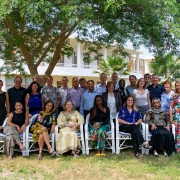
World leaders identify solutions and call for immediate action
Hamburg / Cairo, 16.9.2019.
On the eve of the biggest global “Fridays for Future” youth strike for climate, the World Future Council offers its strong support to the dedicated young people holding leaders accountable for their climate commitments. If we are to meet the 1.5°C target of the Paris agreement bold action needs to happen now.
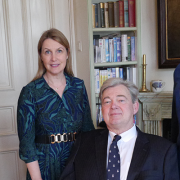
Hamburg, 7th February 2019 – The Supervisory Board of the World Future Council Foundation announced the resignation of Jakob von Uexkull as Chair of the Management Board for health reasons. Von Uexkull founded the World Future Council in 2007 in Hamburg. As he resigns, the Vice Chair of the Management Board Alexandra Wandel (45) as well as Johanna Dillig (35), Head of Operations, were appointed Executive Members of the Management Board. Wandel now acts as spokesperson and Executive Director of the foundation, and Dillig as Director of Operations as well as Vice Chair of the Management Board.
The World Future Council (WFC) identifies and spreads the best and most sustainable policy solutions worldwide in order to pass on a healthy planet and just societies to our children. The new board announced that core topics of their work in 2019 will be climate protection and renewable energy, child and youth empowerment, agroecology as well as peace and disarmament. One of the highlights will be the Future Policy Award, which will focus on improving the lives of youth this year.
Alexandra Wandel states: “1.8 billion young people on our planet are confronted with numerous challenges: access to jobs and quality education, climate change, destruction of their environment and digitalisation. This is why the World Future Council will dedicate its Future Policy Award on youth empowerment, researching and awarding policies that create decent and sustainable jobs, and engaging youth for meaningful societal purposes.”
The new Management Board is supported by strong advocates, amongst them Honorary Councillor Prof. Dr. Michael Otto (entrepreneur, Germany) as well as the following Expert Commission Chairs from the Council: Dipal Barua (Founder and Chairman of the Bright Green Energy Foundation, Bangladesh) for Climate and Energy , Helmy Abouleish (CEO, Sekem, Egypt) and Vandana Shiva (Founder, Research Foundation for Science, Technology and Ecology India ) for Agroecology, Dr. Auma Obama (Founder and Director, Sauti Kuu Foundation, Kenya ) for the Rights of Children and Youth and Alyn Ware, Founder and Global Coordinator of the Network Parliamentarians for Nuclear Non-proliferation and Disarmament (PNND), New Zealand/Czech Republic ) for Peace and Disarmament. Abouleish, Barua, Shiva and Ware are also recipients of the Right Livelihood Award (also known as Alternative Nobel Prize).
Miriam Petersen
Media and Communications Manager
World Future Council
Dorotheenstr. 15, 22301 Hamburg, Germany
Email: miriam.petersen@worldfuturecouncil.org
Phone: +49 (0)1781018019
www.worldfuturecouncil.org
The World Future Council (WFC) consists of up to 50 eminent global changemakers from governments, parliaments, civil society, academia, the arts, and business who have already successfully created change. We work to pass on a healthy planet and fair societies to our children and grandchildren. To achieve this, we focus on identifying and spreading effective, future just policy solutions and promote their implementation worldwide. Jakob von Uexkull, the Founder of the Alternative Nobel Prize, launched the World Future Council in 2007. We are an independent, non-profit organization under German law and finance our activities from donations. For information visit www.worldfuturecouncil.org
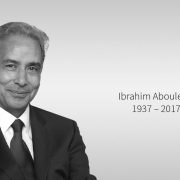
The Right Livelihood Award Foundation and the World Future Council are deeply saddened by the passing of their Egyptian Laureate and founding member Dr Ibrahim Abouleish.
Dr Abouleish, founder of SEKEM, received the ‘Alternative Nobel Prize’ in 2003 for implementing an innovative business model which combines commercial success with social and cultural development.
Dr Monika Griefahn, Chair of the Foundation’s Board, said: “On behalf of the entire Right Livelihood Award family, I would like to express our deepest condolences to the Abouleish family. Dr Abouleish was a true visionary and trailblazer, and the world is only now starting to catch up with his 40-year-old model of environmentally sustainable, socially just and economically viable development. A joyful and warm-hearted person, he will be greatly missed by all of us and his many colleagues and friends around the world.”
Dr Abouleish founded SEKEM in 1977 as a blueprint for the healthy corporation for the 21st century. Taking its name from the hieroglyphic transcription meaning “vitality of the sun”, SEKEM was the first entity to develop biodynamic farming methods in Egypt and has since broadened its scope to address health, educational and cultural issues. Dr Abouleish also founded the Heliopolis University for Sustainable Development where students study science, technology, arts, engineering and economics with a strong emphasis on sustainability. Over the years, SEKEM and the Heliopolis University played host to meetings of the World Future Council and the Right Livelihood Award Laureates.
“Ibrahim Abouleish’s remarkable initiative SEKEM has brought the desert alive. His Heliopolis University broadens the human mind, challenging modern monocultural thinking. Both show how much more humans can achieve when their work is based on cooperation, solidarity, mutual respect and the common good. His life achievements SEKEM and Heliopolis University are pioneering projects healing people and planet,” said Right Livelihood Award and World Future Council Founder Jakob von Uexkull.
A tireless advocate for sustainable development over five decades, Dr Abouleish has received numerous awards and recognitions in addition to the Right Livelihood Award, including the German Federal Cross of Merit and the United Nations ‘Land for Life’ Award. He was also named a distinguished social entrepreneur by the Schwab Foundation.
According to Islamic traditions, Dr Abouleish will be buried tomorrow, Friday, 16 June at 12:00.
More information:
http://www.rightlivelihoodaward.org/laureates/ibrahim-abouleish-sekem
https://www.worldfuturecouncil.org/councillors/
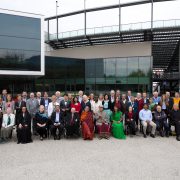
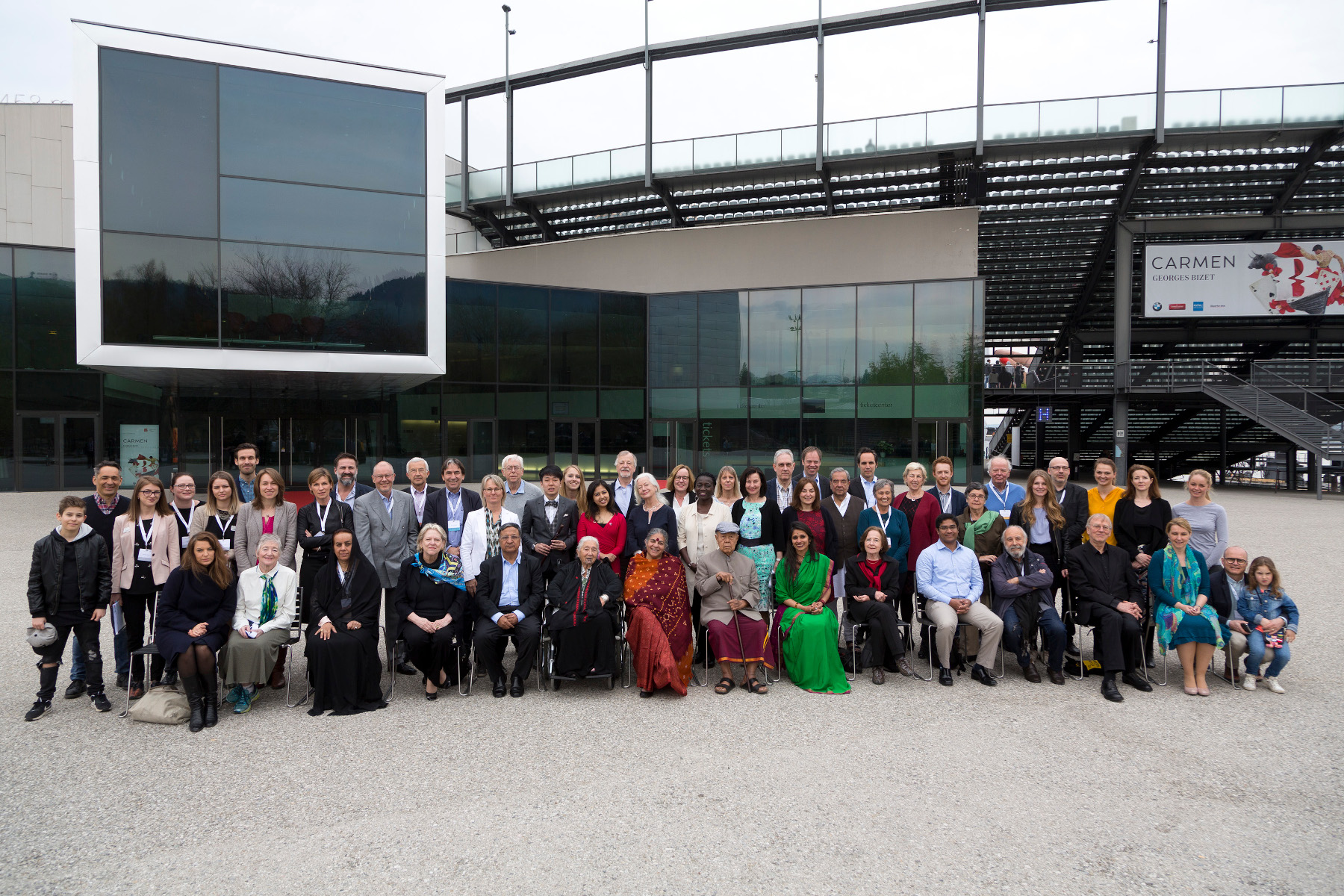
The World Future Council and all participants of the World Future Forum 2017 in Bregenz (c) Kongresskultur Bregenz. Photo by: Dietmar Mathis
We, the World Future Council commit to take action for systems change.
We commit ourselves to support the regeneration of our societies, our economies, our agriculture, our cities, our humanity and our Mother Earth, at this fragile moment in time when systems are disintegrating and degenerating.
Today, everyone’s actions – and failures to act – can decide the future of humanity.
If you, like us, believe this time of breakdown is and can be a time of breakthrough;
if you are willing to commit yourselves, as are we, to be the transformation that we know is possible;
if you, like us, see the compelling need for regenerative change –
join us.
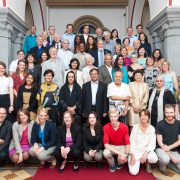
From March 30th – April 2nd, more than 50 Councillors, Ambassadors and members of the Supervisory Board will convene at the World Future Forum 2017 “10 Years World Future Council: Best Policies for Future Generations”, which will take place in Bregenz, Austria, with the generous support of the Festival House Bregenz and their partners.
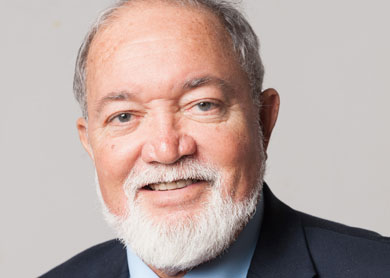
The World Future Council is deeply saddened by the loss of founding member and Honorary Councillor, Sir James R. Mancham, who passed away on January 8, 2017, aged 77. Read more
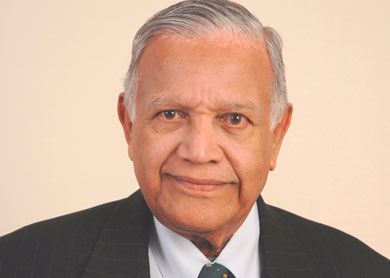
The World Future Council is deeply saddened by the loss of founding member and Honorary Councillor, Judge C.G. Weeramantry who passed away in Colombo, Sri Lanka on 5 January 2017.
Judge Weeramantry was a Judge of the International Court of Justice (ICJ) from 1991 to 2000, serving as its Vice-President from 1997 to 2000 and a Judge of the Supreme Court of Sri Lanka from 1967 to 1972.
During his time as an ICJ judge, Weeramantry contributed to several landmark cases before the Court. These included a case on the illegality of the use and threat to use of nuclear weapons where he shared remarkable and poignant observations, and the case concerning the Gabcikovo-Nagymaros project which contributed to the furtherance of international sustainable development law.
In the course of his professional career of over five decades as lawyer, legal educator, domestic judge, international judge, author and lecturer, Judge Weeramantry played a leading role in several developing areas of the law. These included the illegality of nuclear weapons, sustainable development, rights of future generations, exploring the interface areas between law and religion and promoting cross cultural understanding. He was also a passionate advocate of peace education which he believed should include teaching principles of international law at an early age.
He has written over twenty books, most of them extremely influential and translated into many languages, and lectured extensively on these topics in over forty countries. His book, ‘Nuclear Weapons and Scientific Responsibility’ pioneered the concept of ethics in science, challenged the notion that science is neutral, and introduced the idea of a ‘Hippocratic oath’ for scientists. His book ‘Tread Lightly on the Earth’ offers a pronounced insight and analysis of the concerns of the world’s principal religions with the preservation and nurturing of the natural environment.
After stepping down from the ICJ, Weeramantry took up the position of President of the International Association of Lawyers Against Nuclear Arms, and continued advancing the application of international law for the benefit of peace and humanity in his new position. This included drafting, and presenting to the UN Security Council a seminal statement on the illegality of the preventive use of force, endorsed by over 200 prominent judges, legal scholars and lawyers from around the world. As IALANA President he also penned an influential public statement, in the wake of the Fukushima disaster, on the application of future justice principles to nuclear energy – in order to highlight its illegality and stupidity.
The Judge was founding Chair of the Centre for International Sustainable Development Law’s International Commission, and then, for 16 years, Patron of the Centre, which is based at McGill University in Montreal, Cambridge University, the University of Nairobi, and the University of Chile.
Weeramantry also founded the Weeramantry International Centre for Peace Education and Research which produced a vast corpus of research and writing based on Weeramantry’s legal knowledge and philosophy for humanity.
Judge Weeramantry received a number of prestigious awards including the Sri Lankabhimanya (highest National Honour of Sri Lanka), Right Livelihood Award (‘Alternative Nobel Peace Prize’) and the UNESCO Peace Education Prize, which he received in recognition of his commitment and concrete undertakings in support of the concept and culture of peace through his career.
With this letter our heartfelt condolences go out to his family. Judge C.G. Weeramantry will be missed as a friend as well as a moral authority.
In the early 1990s a former British government adviser called Sir Peregrine Worsthorne reviewed the Cold War period and his own role in it and was horrified. He realised how easily war could have broken out in Europe in the 1980s through a misunderstanding while the Soviet Union was already dis-integrating. As NATO Policy was to respond to a perceived conventional Soviet attack with nuclear weapons, he envisaged a scenario where President Reagan would have consulted his friend PM Thatcher about starting a nuclear war and she would have asked him, as her advisor, and he would have adviced her to go ahead. Read more