Tag Archive for: Energy & just Development

Renewable Energy and Sustainable Development

Renewable-Energy-and-Sustainable-Development

Abstract

Societies around the world are on the verge of a profound and urgently necessary transformation in the way they produce and use energy. This shift is moving the world away from the consumption of fossil fuels toward cleaner, renewable forms of energy. The rapid deployment of renewable energy has been driven mainly by a wide range of objectives (drivers), which include advancing economic development, improving energy security, enhancing energy access and mitigating climate change. While such presumed benefits are widely cited as key drivers in political and energy debates, specific, documented evidence of such benefits remains rather limited for reasons including a lack of adequate conceptual frameworks, methodological challenges, and limited access to relevant data.

This paper identifies some of the remaining questions relating to the implications of aiming for 100% renewable energy, with the aim to provide a basis for subsequent development of a conceptual framework for future work on this topic.

100% renewable energy and poverty reduction in Tanzania

100Re_poverty_reduction_Tanzania

Abstract

In September 2015 world leaders signed off on a new global 15-year plan to tackle poverty inequality and climate change. In doing so, they pledged to ensure all people have access to affordable, reliable, sustainable and modern energy. Only 3 months later, in December 2015, all nations committed to limit global warming to 1.5 degrees Celsius by phasing out harmful emissions. For this, national governments are invited to communicate by 2020 their mid-century, long-term low greenhouse gas emission development strategies. This essentially requires countries across the world to develop an adequate 100% Renewable Energy strategy. For developing countries with little access to energy services, this is an opportunity to leapfrog fossil fuels and use renewable energy as a tool for socio-economic development.

This is why in 2016, CAN-Tanzania, the World Future Council and Bread for the World have embarked on a 18-month project in Tanzania to develop a coherent strategy on how to implement 100% Renewable Energy (RE) as part of the country’s Sustainable Low Carbon Development (LCD) and Poverty Reduction Goals. This project builds on the previous experiences of the project partners for facilitating the deployment of renewable energy in Tanzania.

Mid-term Report

What Tanzania can learn from Bangladesh on energy access

“I have a dream of empowering 75 million people of Bangladesh through Renewable Energy Technologies”. This is how, back in 1996, Dipal C. Barua, now founder of the Bright Green Energy Foundation, decided to start expanding RE in Bangladesh and make the country the first solar nation of the world by 2020.

By then, the country faced a serious energy crisis. Only 30% of the 162 million people of Bangladesh had access to electricity. Supply was hardly reliable. Overall demand for electricity was rising by about 10 per cent annually. Infrastructure was deficient, poorly managed and could not reach many rural areas (where 75% of the population lives) due to inaccessibility and remoteness. Therefore, most of the energy needs were met by biomass for cooking and kerosene for lighting (Sea4all, 2012).

Today, the country has installed more than 4 million Solar Home Systems (SHS) in off-grid rural areas, benefiting over 25 million people and wiping kerosene for lighting off the map. At present, over 60.000 SHS are being installed per month. The country has gained the capacity and knowledge of assembling all components of SHS in its territory, with more than 100.000 green jobs. Children’s evening study time is reported to have improved, as well as the health of households members. Businesses are rising due to longer hours and more varied options of income-generation activities. And no kerosene is used for lighting. SHS has become affordable at the price of kerosene thanks to innovative financing schemes allowing for 15% down payment to install the 15w-to-85w packages system, and the remaining 85% to be paid in 12/24/36 monthly installments (Bright Green Energy Foundation, 2016).
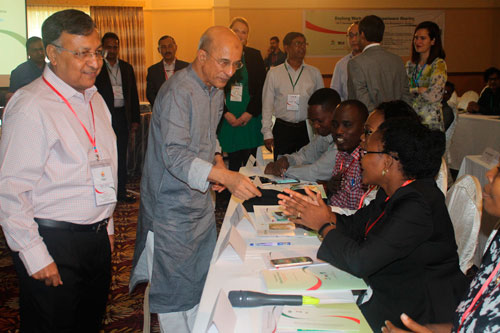
Bangladesh_Tanzania_study_tour2This is astonishing for Bangladesh, a low-income country in which over 40% of its population lives below the international extreme poverty line of $1.25 per person per day (UKgov, 2014). Nevertheless, Bangladesh successfully managed to grasp the nettle and make a decisive step towards RE deployment as a means to provide widespread energy access and foster socio-economic development. As the Energy Adviser (Minister) to the Prime Minister of Bangladesh, Mr. Tawfiq-e-Elahi Chowdhury highlights: “Bangladesh used its courage and imagination to break barriers and increase Renewable Energy”.

This was not a smooth journey. As Dipal C. Barua stresses out, there were many challenges, such as limited or no access to finance; lack of skilled manpower; lack of proper financial model design to make SHS affordable; lack of awareness about the clean and environment friendly energy sources; and more important, there was a lack of national energy policy. The fact that Bangladesh was blessed with over 300 days of direct sunlight made him, nonetheless, embrace solar energy as the best solution to (em)power the population of Bangladesh.

“When the Government of Bangladesh saw that Solar Home Systems overpassed the 1 million in rural areas despite the absence of a political framework, they realized how serious the renewable energy pathway was to increase electricity access”, states Barua. Indeed, in 2000, the Government of Bangladesh issued its Vision and Policy Statement to bring the entire country under electricity by the year 2020. And because of its cost-competitive nature, this goal was being implemented in rural areas almost exclusively with the use of SHS.

According to Dr. Khan, professor at North-South University in Bangladesh: “Renewable energy off grid solutions were taking care of the poorest sectors of the population because they do not have the means to live where modern services are”. In response to these developments, 2008, the Ministry of Power, Energy and Mineral Resources of Bangladesh set a renewable energy policy to create an enabling environment and legal support to encourage the use of renewables. By virtue of this policy, the Sustainable and Renewable Energy Development Authority (SREDA) was established as a focal point to support the development and promotion of RE through policies, laws, rules and regulations relating to sustainable energy and through constant multi-stakeholder consultation. For Mr. Alauddin, Joint Secretary, Power Division, Ministry of Power and Mineral Resources “If you want to bring in a new technology, you also need an institution that has the skills, capacities and mandate for this. This is why we established SREDA”.
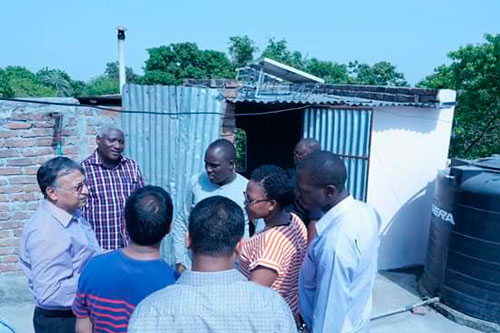
Bangladesh_Tanzania_study_tour3For the financing, a government-owned financial institution, the Infrastructure Development Company Limited (IDCOL), played a critical role by providing its support through grants and loans to RE private and non-profit implementing organizations. Up to this day, only in SHS, IDCOL has invested more the $600 million and the agency is calculating that another 3.5 million SHS can be installed within next few years. Further, IDCOL is supporting bio-gas based power projects, solar-mini grid projects, solar irrigation pumps, and biogas pumps to move the country faster in RE deployment and have a significant impact on national GDP.

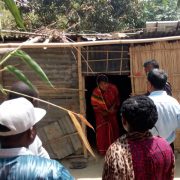
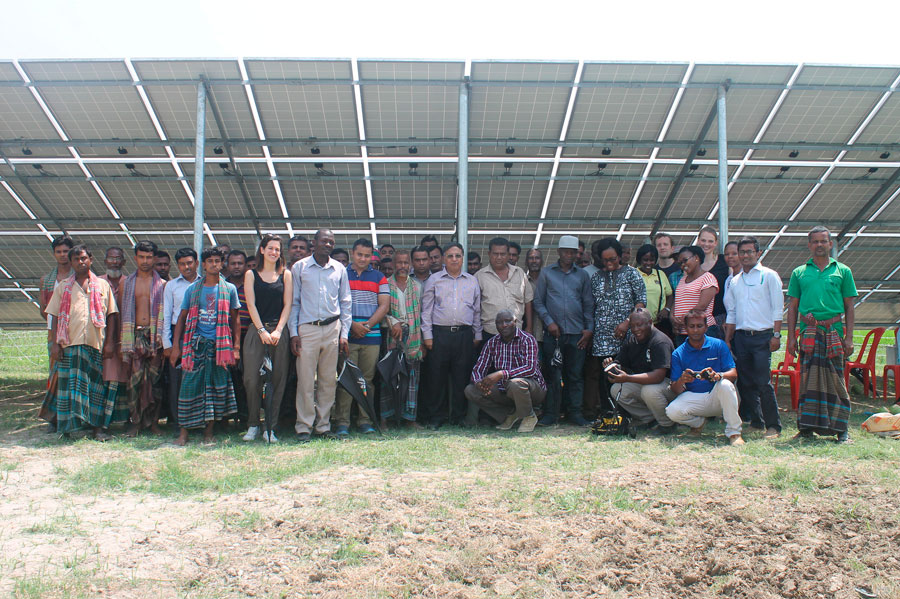
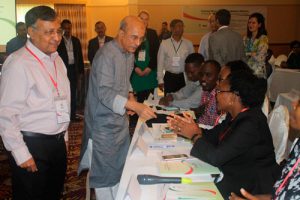
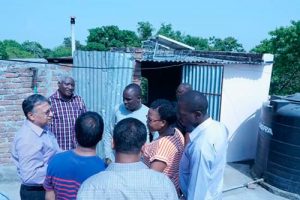
This experience is highly valuable to many countries that find themselves in similar situations. Tanzania is one of these countries, which is why the World Future Council, together with CAN-Tanzania and Bread for the World organized a study tour to Bangladesh on April 17-23, 2016 with a group of 10 members of Parliament, government decision-makers and civil society leaders in the field of renewable energy  looking at strategies to rapidly expand first time access to electricity among its citizens with 100% RE.

“Let’s work together not to reinvent the wheel, but to see the different nature of the wheel”, as Mr. Malik, Executive Director and CEO of IDCOL highlighted when addressing the Tanzanian delegation. In Tanzania, 67.87% of the population lives below $1.25 a day.

This situation is compounded by the low level of electrification, where only 7% of rural population and 39% of urban population have access to electricity. In turn, lack of access to modern energy services exacerbates poverty due to persistent limited production opportunities and social facilities. But Tanzania, as Bangladesh, is endowed with abundant, high-quality renewable resources, which could play a significant role in meeting the county’s energy needs through off-grid solutions.
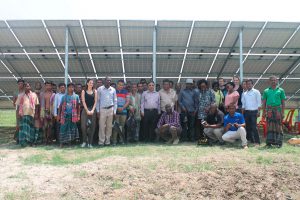
Bangladesh_Tanzania_study_tour1Today the African country is already ripping the socio-economic benefits of pilot projects being implemented by actors such as Tanzania Traditional Energy Development Organization (TaTEDO), and there are companies such as Mobisol which have installed more than 40.000 pre-paid SHS in Tanzania and Rwanda. But Tanzania can perform much better and at larger scale. “This study tour changed my mind about the potential of Renewable Energy as an effective tool to provide energy access to all people”, said one of the members of the Tanzania parliament after exploring the RE projects in rural off-grid areas of Faridpur, Madhukhali and Kustia, in Bangladesh.

When exchanging thoughts and experiences with Bangladeshi RE stakeholders, such as the Bangladesh Ministry of Energy, SREDA’s Chairman or the Director of Renewable Energy Limited, all participants concluded that this trip has just opened doors and is the start of a long journey of collaborations and working together. “In fact, we need to bring the experience from Bangladesh to Tanzania, especially on developing a comprehensive finance model for individual households and communities.”

Authors

Irene Garcia, Policy Officer, Climate, Energy and Cities, WFC
Anna Leidreiter, Senior Program Manager, Climate, Energy and Cities, WFC

Cities must be Regenerative. But what kind of Regeneration are we actually talking about?

It is not just about the regeneration of natural resources but it is also not just about what is commonly reffered as urban regeneration. As the term regenerative appears more and more within the international discourse on cities, clarity over its actual meaning is paramount.

The term ‘regenerative´ is becoming increasingly popular in the discussion around sustainable urban development and especially relevant now as it gets frequently mentioned within the UN discourse leading up to Habitat III. For example, the term has recently been re-adopted in the official document of the UN World Urban Campaign as one of the 10 final Principles of The City We Need 2.0.  The 6th principle explicitly states that “The City We Need is Regenerative and resilient”. The terms is also mentioned several times throughout this document as well as in other UN preparatory documents towards Habitat III such as the final Policy Paper 8 Urban Ecology and Resilience.

But what does Regenerative actually mean?

While the ultimate aim of a regenerative city is to be able to regenerate the natural resources that it absorbs, it is important to highlight that the concept is in fact much broader and comprehensive. It is therefore important to clarify the types of Regeneration that we would  see in the Regenerative City. In summary, we can say that the concept embraces 4 key types of regenerations, all extremely important for the effective implementation of the Regenerative City.

4 Fundamental Regenerations

  1. Regeneration of Resources (from Linear to Circular Flows)

Regenerative urban development seeks to mimic the circular metabolic systems found in nature. This will require a switch in paradigm away from the old linear metabolism (which allows cities to operate within an isolated segment of the resource cycle) to a new circular metabolism. This will mean closing the urban resource cycle by finding value in outputs that are conventionally regarded as waste and using them as resource inputs in local and regional production systems. For example, all the energy the city consumes needs to be able to be naturally regenerated by natural processes. For this reason, renewable energy is considered the only viable energy sources for regenerative cities, as it is continuously available and does not involve the consumption of a finite stock such as fossil fuels. Similarly all the material goods the city needs are not discarded into landfills but are kept in the resource loops by being upcycled, recycled, reused or by becoming a useful input in another processes such as energy production processes.

  1. Regeneration of Natural Capital and Urban Ecosystems (From Consuming to “Prosuming”)

The Regenerative city is not only conceived as a consuming entity, but actively contributes to the production of the resources it needs and to the restoration of the natural capital and ecosystems from which it depends. For example, food supplies are complemented through urban agriculture (including vertical agriculture), energy through solar rooftops, geothermal and bio-waste, and water through storm water collection at the block level and by allowing urban aquifers to be replenished through water percolation across the extensive green and permeable areas in and around the city. This enhanced ecosystem service infrastructure within the urban area improves the city’s self-sufficiency as well as its resilience. For example, increasingly relying on urban agriculture and on food from the immediate hinterland improves self-sufficiency while extensive greener areas provide benefits in terms of pollution mitigation, CO2 sequestration, water retention, natural filtering for cleaner urban aquifers, flood resilience etc. Similarly, relying on renewable energy sources from within the city or from the immediate surroundings increases the city’s resilience to energy prices fluctuation and dependency on imports. In addition, the regeneration of the productive capacity of the city and its ecosystems will lead to a renewed, enhanced relationship between cities and their hinterland and between urban and rural areas.

  1. Regeneration of Urban Spaces (from Sprawled to Dense)

Rather than sprawling and expanding on virgin land, regenerative urban development is about creating denser cities by redeveloping and regenerating the existing urban fabric and existing neighbourhoods (instead of simply developing new sites from scratch). Increasing density has in fact huge benefits in terms of efficient use of energy, resources, infrastructures and transport. At the same time, the focus of urban regeneration projects should be on making cities more people-centred, increasingly functional for the community, more accessible and inclusive and at the same time able to positively enhance the natural systems of the city and of the surrounding areas. Retrofitting and renovation projects are prioritized while at the same time historical and cultural heritage is also conserved and revalued. Enhancement of urban ecosystems is prioritized and it is achieved by making sure the city is rich of green areas and vegetation that, for example, help to block shortwave radiation, cool the ambient and create more comfortable urban microclimates. The latter can be highly beneficial, particularly given the risks of increase in temperature due to global warming. Improving urban ecology, promoting bioremediation of degraded areas and flora regeneration are also essential and have benefits beyond the environmental ones as they also increase the liveability and aesthetic value of the city.

  1. Regeneration of Communities (from Passive to Active Engagement)

Local communities and local businesses are themselves regenerated,revitalized and strengthened by becoming the actual leaders and drivers of all the regeneration projects taking place in the city. Citizens are constantly engaged and are encouraged to take part in the decision-making processes and community-based activities within the city. The informal sector, local youth and marginalized groups are also involved. For this purpose, it is crucial to establish a policy framework that promotes greater citizen participation, facilitates the processes of collaboration among stakeholders and of coordination across levels of governance and actively supports innovation and formation of new activities, locally based projects, start-ups and community initiatives. All of these processes contribute to the creation of a more dynamic, lively, people-centred and inclusive urban reality.

By Filippo Boselli, Policy Officer – Climate, Energy and Cities.

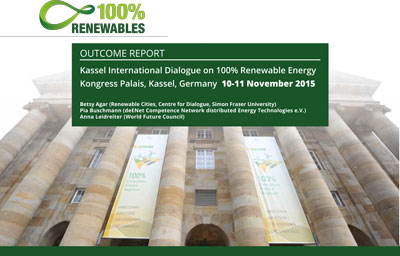
Kassel International Dialogue on 100% Renewable Energy – Outcome Report

Kassel_International_Dialogue_on_100REb

Abstract

“The question is no longer whether the world will transition to renewable energy but rather how long the transition will take and how can the transition be carried out to maximize the benefits today and for future generations.”

With this good news, Harry Lehmann, General Director of the German Federal Environment Agency opened this year’s Kassel International Dialogue (KID) which was dedicated to developing a roadmap that guides local governments—e.g. cities and regions—in transitioning their jurisdictions to 100% renewable energy.

Report

What Place for Renewables in the INDCs?

What_place_for_Renewables_in_the_INDCs

Abstract

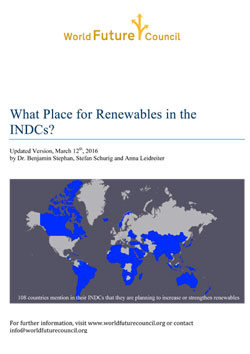
COP 21 In Paris most likely marks a turning point in international climate policy making: UNFCCC parties for the first time adopted a legally binding agreement that is universal and provides a mechanism that has the potential to build global mitigation efforts that help us to avert dangerous climate change. Intended Nationally Determined Contributions (INDCs) are a crucial element of the Paris Agreement. They are the foundation on which the success of global mitigation efforts will be built. Scientific assessments concluded that current INDCs are an important contribution, but still fall short of reaching the long-term goal adopted with the Paris Agreement of “Holding the increase in the global average temperature to well below 2 °C above pre-industrial levels and to pursue efforts to limit the temperature increase to 1.5 °C above pre-industrial levels…” by the end of the century (UNFCCC 2015a: Article 2). The available assessments vary in their results – depending on the underlying models the assessments deployed (Levin and Fransen 2015).

Report

Cities, don’t just minimise energy use. Challenge it!

Between 1900 and 2000, global population increased 4 times, but resource demand increased 16 times.

Even worse, last year, the collective resource consumption by humanity overshot the earth’s ability to regenerate in August already. This means that we used all the resources the planet produces in 12 months in the first 8 months, and for the rest of the year we were literally in debt to nature. And cities, with a modus operandi fuelling and fuelled by fossil resources like coal, oil and gas, are largely responsible for it, accounting today for 70% of GHG emissions.

But often too, cities feel more severely the risks of the climate change they themselves create. Even in a place like New York City, one of the most advanced and wealthiest cities in the world, in 2012, Hurricane Sandy shut down the city, caused power outages and blocked roads and transport for days. It is clear that we need to revert this path marked by unsustainable development, which is growing disaster risks and whose main crystallisation is taking place in cities.

So how do we get back on track? And what’s the role of cities?

We can’t just do less damage; we have to repair the damage and ensure that cities operate in a system in which they do not only consume resources, but they also contribute to producing and restoring the resources they consume. In this system, materials and goods from the region are prioritised by cities. Waste is re-defined as a by-product that can always be recycled or reused in another processes. Water is also recycled or treated before discharged into natural water bodies. Organic waste is treated and used as soil fertilizer. And energy comes from local renewable energy sources. In a nutshell, we leave behind the city organised around petrol to give way to the Regenerative City.

Fortunately, there are encouraging signs on that front, as I could witness at the Smart City Expo Puebla, celebrated in Mexico from February 16-18, in which the World Future Council participated. Interventions made by mayors and experts working at the local level revealed that cities are aware of the profound and urgent shift they need to make in the way they produce and use energy. And, as managers of energy infrastructures and services, they are uniquely positioned to do it.

This strategic approach has led cities to innovate with new kinds of recycling programs. For example, the city of Buenos Aires has seen a 50% reduction in waste sent to landfills compared with 2012 and it has committed to reducing it further by 83% by 2017. And something that would be unthinkable decades ago, cities are starting to give priority to green areas over highways, as clearly exemplified by the restoration of the Cheonggyecheon stream in Seoul, which for more than three decades buried beneath a four-lane, elevated freeway built as part of an industrialisation and modernisation process. The building sector, too, is subject to new policies in this direction, as it was highlighted during the conference. For example, NYCis undertaking a 10-year plan to improve the energy efficiency of NYC’s one million buildings to reduce building-based emissions 30% by 2025. Mexico City is developing norms for building energy performance to double the energy efficiency rate of buildings by 2030. And Portland is working with residents, businesses and community partners to advance ecoroofs in the city as a means to save energy consumption, reduce pollution and decrease stormwater volume.

Most important, cities are starting to realise something fundamental: they need to go beyond minimising energy use to actually challenge it. Energy efficiency is not only about simply reducing energy demand to offer the same service, but about a fundamental change in the structure, nature and role of the energy system. And nothing epitomises best this than Vancouver orFrankfurt, which are taking strong action on energy efficiency as a core component of their strategy to go 100% RE by 2050.

Thus, Vancouver intends to reduce city-wide building energy demand by about one-third over 2014 levels by 2050, and meet the rest of the energy demand through renewable electricity. Similar in the transport sector, where the goal is to shape the transport system in a way that most of the journeys will be made on foot or by bike, and the remaining trips by transit will be made using electric vehicles of various types. All together, these two sectors accounted for over 90% of the city’s emissions in 2014. In the case of Frankfurt, energy efficiency measures have led to a 37 per cent reduction in electricity consumption by private households by 2015. As with Vancouver, the rest of the energy consumption and production demand will be met through local and regional renewable sources.

This does not only make sense in terms of climate and environmental protection, but also in terms of economic development. By focusing on regenerative urban development, the city of Vancouver has created more than 3.000 new green local jobs in the last 5 years. And the city’s brand is currently valued at US$31bn when measured by investment, reputation and performance as “green, clean and sustainable”. In Frankfurt, energy efficiency measures have already helped the city to save €100m in energy costs, a number that is projected to rise. And its 100% RE strategy is gradually bringing down its current energy import costs from €2bn a year to zero.

Locally determined contributions of cities like these ones show us that challenging the traditional energy system upon which cities have been built is actually possible, and indeed beneficial from a social, environmental and economic point of view. Just imagine what world would be possible if we start replicating these successful champions and make the transition to regenerative cities on our own terms, in ways that maximise the benefits to us today and to future generations. Surely a very different kind of city story to tell.

By Irene García, Project and Event Manager – Climate, Energy and Cities.

Regenerative Cities in China

Renegerative-Cities-in-China-thumbnail

Abstract

A new type of urbanization is needed. One that reflects a different type of development, also known as the New Normal which is currently gaining widespread support throughout China. The New Normal understands the substantial changes affecting China (namely a decline in the availability of inexpensive land and cheap labour, slower economic growth and, above all, increasingly exacerbating environmental distresses) and responds by promoting a new kind of people-centred development that favours slower economic growth, people well-being, innovation, domestic market development and that is particularly devoted to environmental protection and sustainability.

In order to ensure the successful implementation of the New Normal, a new model of urbanization that encourages and supports this new type of socio-economic development is needed. It is hereby recommended that cities in China start their transformation to become Regenerative Cities. Given the environmentally degraded conditions of many Chinese cities and ecosystems, a regenerative type of urban development that is able to establish a symbiotic and mutually beneficial relationship with the environment is not only recommended but urgently needed.

English
 
中文

Sponge Cities: What is it all about?

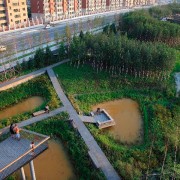
The 34 hectares urban storm water park in the city of Harbin in northern China is an example of successful Sponge City intervention. The storm water park provides multiple ecosystems services: it collects, cleanses and stores storm water and lets it infiltrate it into the aquifers. At the same time it protects and recovers the native natural habitats and provides an aesthetically appealing public space for recreational use.


Sponge City. Yet another term on the growing list next to regenerative, sustainable, green, eco, resilient, low-impact, future proofing, zero-carbon, and the list goes on.

Strange as it may sound, this term has actually gained a huge amount of support, especially in China. In fact, the Chinese government has already chosen 16 pilot cities and allocated to each of them between 400 and 600 million yuan for the implementation of innovative water management strategies that would gradually transform these cities into “Sponge Cities”.

What are the key issues the Sponge City wants to solve?

Before explaining in more detail what a Sponge City actually is, it is important to appreciate the main issues that the Sponge City intends to tackle. These are mainly four:

  • Less water available in urban and peri-urban areas. First of all, a key question we need to answer to explain this issue is: Where do we get the water that comes out of our taps? Many times it is actually coming from aquifers underneath our feet. As it rain, water is absorbed by the ground and naturally filtered by the soil. We can then extract this water by drilling wells into the ground and pumping water out of it. The water is then collected and treated before is distributed across the city and can reach every tap in each of our houses and offices. The problem is that extensive urbanization and urban sprawling led to the formation of thousands of square kilometres of impermeable areas made up of impervious roads, pavements, roofs and parking lots that do not allow water to be absorbed into the ground but that simply collect the rainwater through the urban drainage infrastructure and channel it into rivers, lakes or into the sea. This traditional type of design led to the creation of cities which are increasingly impermeable and have an increasingly greater impact on the natural water cycle. In practise this means that since less rain water is allowed to filter through the urban soil, less water is available to be extracted from aquifers in urban and peri-urban areas.
  • Polluted water discharged into rivers or the sea. Another key issues is related to the fact that rain water and wastewater (namely water from our sinks and toilets) is collected by one single drainage system. This drainage system (imagine one big pipe) collects all the rain water (when it rains) and the wastewater from our houses and directs it to a wastewater treatment plant where it gets treated before it is discharged again into rivers or the sea. When it rains, many times the wastewater treatment plant cannot accommodate all the water that the drainage systems carries. Therefore much of the rain water mixed with the wastewater is discharged untreated into rivers. The more impermeable the city is, the more water will be mixed with wastewater and will not be able to be treated but discharged directly into rivers.  This increases the level of pollution of local water bodies.
  • Degradation of urban ecosystems and green areas due to sprawling. This led to a considerable loss of urban biodiversity, a drop in available green areas for natural ground filtration of storm water, a decrease in CO2 capture by plants, fewer spaces for natural cooling through urban green microclimates and generally less liveable, healthy, comfortable and attractive public spaces.
  • Increase in the intensity and frequency of urban flooding particularly considering predicted increase in extreme weather events due to climate change. As the absorbing capacity of the urban surface is decreased, storm flooding risk is increased. Flooding leads to increased groundwater pollution and has considerable impact in terms of damage to properties and health related issues.

What is a Sponge City?

The Sponge City indicates a particular type of city that does not act like an impermeable system not allowing any water to filter through the ground, but, more like a sponge, actually absorbs the rain water, which is then naturally filtered by the soil and allowed to reach into the urban aquifers. This allows for the extraction of water from the ground through urban or peri-urban wells. This water can be easily treated and used for the city water supply.

What does a Sponge City need in practise? 

A sponge cities needs to be abundant with spaces that allow water to seep through them. Instead of only impermeable concrete and asphalt, the city needs more:

  • Contiguous open green spaces, interconnected waterways, channels and ponds across neighbourhoods that can naturally detain and filter water as well as foster urban ecosystems, boost bio-diversity and create cultural and recreational opportunities.
  • Green roofs that can retain rainwater and naturally filters it before it is recycled or released into the ground.
  • Porous design interventions across the city, including construction of bio-swales and bio-retention systems to detain run-off and allow for groundwater infiltration; porous roads and pavements that can safely accommodate car and pedestrian traffic while allowing water to be absorbed, permeate and recharge groundwater; drainage systems that allow trickling of water into the ground or that direct storm water run-off into green spaces for natural absorption
  • Water savings and recycling, including extending water recycling particularly of grey water at the building block level, incentivizing consumers to save water through increased tariffs for increase in consumption, raising awareness campaigns, and improved smart monitoring systems to identify leakages and inefficient use of water.

What are the benefits of a Sponge City? 

There is wide range of benefits associated with the implementation of sponge cities. These include:

  • More clean water for the city. Replenished groundwater and thus greater accessibility to water resources for cities. This also entails greater water self-sufficiency which allows cities to increasingly rely on water sources from within their boundaries
  • Cleaner groundwater due to the increase volume of naturally filtered storm water. This means lower environmental and health costs due to considerable decrease in water pollution
  • Reduction in flood risk as the city offers more permeable spaces for the natural retention and percolation of water. This leads to better resilience and in particular greater ability to deal with higher flood risks resulting from climate change
  • Lower burdens on drainage systems, water treatment plant, artificial channels and natural streams. This also entails lower costs for drainage and treatment infrastructure
  • Greener, healthier, more enjoyable urban spaces. Greener urban spaces improve quality of life, create more pleasant landscape aesthetics and recreational areas that are enjoyable and attract people. This also means increase in land value due to aesthetically more pleasing, cleaner and healthier open spaces close to private properties
  • Enriched biodiversity around green open spaces, wetlands, urban gardens and green rooftops

Are you in? 100% Renewables, Zero Poverty

Abstract

In September 2015 world leaders signed off on a new global 15 year plan to tackle poverty inequality and climate change. In doing so, they pledged to ensure all people have access to affordable, reliable, sustainable and modern energy. Today 1.2 billion people (nearly 1 in 7) lack access to electricity. But communities are rolling out renewables in order to beat back poverty, as these technologies can provide sustainable energy access where coal, oil and gas have failed for the last century. Sustainable energy can improve health by reducing pollution, it can improve education, create jobs and kickstart industries in minor economies.

There is already a growing movement of leaders from villages, cities and businesses around the world who are not waiting for national governments to act, but are getting their own communities on track to a 100% renewable energy powered future – to deliver the just, equitable, healthy and prosperous world we need. This report features a range of these people whose stories highlight the development benefits derived from getting on track to go 100% renewable.

Full Report