Announcement: NonHazCity Building Award Ceremony at Green Governance Day in Vilnius, 26 November 2025

Announcement: NonHazCity Building Award Ceremony at Green Governance Day in
Vilnius, 26 November 2025 

Save the Date: The NonHazCity Building Award Ceremony will take place on 26 November 2025 in Vilnius, as part of the high-level international conference Green Governance Day. The event focuses on advancing sustainable governance and Green Public Procurement, addressing municipal leadership including mayors, vice mayors, and city-level management across the Baltic Sea Region. 

The Green Governance Day, hosted by Vilnius Municipality, will highlight practical solutions and strategic visions for implementing circular, climate-friendly procurement. The programme features keynote contributions from the Stockholm Environment Institute Tallinn Centre and Turku University of Applied Sciences, along with policy showcases and lighthouse case studies from Lithuania, Germany, Denmark, Estonia, and Sweden. 

A strategic roadmap developed by the ChemClimCircle-2 project will also be presented, offering insights into future directions for sustainable procurement. The event is organized in collaboration with the ChemClimCircle-2 and NonHazCity-3 projects, funded by INTERREG. 

The NonHazCity Building Award 

The NonHazCity Building Award, organised by the World Future Council as part of the NonHazCity 3 EU Interreg project (2023–2025), highlights outstanding public policies that foster non-hazardous, climate-friendly, and circular construction. It aims to promote mutual learning and innovation among municipalities across the Baltic Sea Region. 

The award includes two equally important categories: 

  • The Impact Award, honouring policies with strong chemical regulation, measurable results, and a track record of effective implementation. 
  • The Aspirational Award, recognising bold, forward-looking policies, whether recently adopted or particularly ambitious in scope. 

Three honourable mentions will also be announced. Following an open call for nominations in summer 2024, nine eligible policies were evaluated through detailed research and interviews. An international jury of seven experts from academia, civil society, municipal networks, and sustainable construction selected the recipients in May 2025. 


About the NonHazCity 3 Project 

NonHazCity 3 builds on earlier project phases by focusing on chemical safety in the construction sector. Its 21 project partners work to equip municipalities, companies, and citizens with practical tools and models to reduce hazardous substances in buildings. The project addresses diverse regional contexts and seeks to inspire system-level transformation through collaboration, learning, and policy guidance. 

More information: 

As the final item on the day’s programme, the NonHazCity Building Award Ceremony will offer a celebratory close to the event—recognising forward-thinking municipal action and setting a benchmark for safer, more circular urban development across the Baltic Sea Region. 


FPA 2023: Toxic-Free World Brochure

A Healthy Planet for Healthy Children – Policies for a Future without Toxics

About the new report “A Healthy Planet for Healthy Children – Policies for a Future without Toxics” 

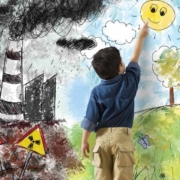
Around six per cent of the world’s disease burden and eight per cent of deaths can be attributed to chemicals. Annually, more than 1.7 million premature deaths among children under the age of 5 are caused by pollution and toxic substances. Children are particularly vulnerable to the effects of hazardous chemicals due to their smaller size and hence greater relative exposure and because of their developing internal organs. However, toxic air and contaminated water and soil is not only an existential threat to human health in general, but also threatens planetary health, jeopardising the sustainability of modern societies.  Achieving a toxic-free future hence is paramount.  

With this new report “A Healthy Planet for Healthy Children”, the World Future Council (WFC) and the United Nations Institute for Training and Research (UNITAR) together aim to draw attention to the “silent pandemic” of disability and disease associated with exposure to hazardous chemicals and pollution during childhood, by providing key facts on how hazardous chemicals affect children’s health. Moreover, the report inspires with insights into award-winning policies that have been honoured with the Future Policy Award – the world’s only award for policy solutions that create better living conditions for current and future generations. The publication also highlights a set of useful policy recommendations, with which policy makers and key stakeholders can take effective action to advance the protection from hazardous chemicals and include a child rights perspective in their policy making.  


Report Download Handout Download


CONTENT 

Highly Hazardous Pesticides (HHP): There is an urgent need for action to phase out the use of toxic pesticides worldwide as they cause, amongst others, serious health problems that disproportionately affect children. This part of the report gives an overview of inspiring policies, which address this problem. 

Toxic Metals: Particularly children are dangerously affected by the harmful exposure to toxic metals. The good news: there are already impactful policies, which address the issue, including, for instance, lead in paint – you can find out more about them on these pages.  

Toxic Consumer Products: Toys and other products intended specifically for children are one category of a much larger set of consumer products that expose infants and children to toxic chemicals. These chemicals impact child health, development, and well-being, and some of them have severe effects on the hormone, reproductive, and immune systems, as well as on the liver and kidneys. Can we reduce the exposure to these hazardous chemicals in the products of everyday use? Yes, we can!  

Environmentally Persistent Pharmaceutical Pollutants (EPPP): The increased use of pharmaceuticals, which escalated even more during the COVID-19 pandemic, the inadequate management of pharmaceutical residues, and unused/expired medicine endanger both the health of humans, particular children, and the environment. How can we tackle this issue by means of policy? Solutions exist, but more countries need to adapt them. 

Chemical Safety and Regulation:  Chemical regulation is a very effective way to reduce the use of harmful chemicals and related negative health effects.   Controlling chemicals must take place both in the early stages and at every stage of the life cycle of chemicals before and after entering the market. Effective tools to increase chemical safety already exist! 

Public Procurement: Public procurement is a strategic tool for achieving key policy objectives. Can we harness its enormous purchasing power more effectively in the future, also in order to tackle chemical pollution? Future-oriented policies prove that we can promote sustainable practices and reduce people’s exposure to hazardous chemicals.  

Policy recommendations: In the last part of this report, you can find seven key policy recommendations that policy makers and key stakeholders can use to advance the protection of children and unborn from the harm caused by hazardous chemicals. We encourage all readers – let’s implement them and step up action! 

2021 Future Policy Award Brochure – Protection from Hazardous Chemicals

About the Future Policy Award 2021 Brochure

This brochure is presenting the winners of the Future Policy Award 2021 on Protection from hazardous chemicals.

Auf Deutsch lesen (PDF)
Read in English (PDF)
Leer en español (PDF)
Lisez en français (PDF)

Championing and spreading effective, future-just policy solutions is the principal goal of the World Future Council. Our Future Policy Award is the first award that celebrates legislation and policies for the benefit of current and future generations at an international level. The aim of the award is to raise global awareness about these exemplary laws and speed up action towards just, sustainable and peaceful societies. Each year we select a priority topic in which policy action is particularly needed. Some of the key global issues that we have addressed include children’s rights, youth empowerment, food security, agroecology. In 2021, we are awarding policy solutions that protect people, especially children, and the environment from hazardous chemicals. We are proud to present to you the winners of the Future Policy Award 2021 and we encourage policymakers globally to adopt and implement key elements of these inspiring, innovative and effective policies in their own countries, states and cities. The Future Policy Award 2021 would not have been possible without our partners and donors! The World Future Council would like to sincerely thank all of them for their generous support – and all the jury members and nominators, researchers and experts who have supported our evaluation process. We are immensely grateful for your precious work and recommendations.Enjoy reading and do visit our website to find out more about the 2021 Awardees.